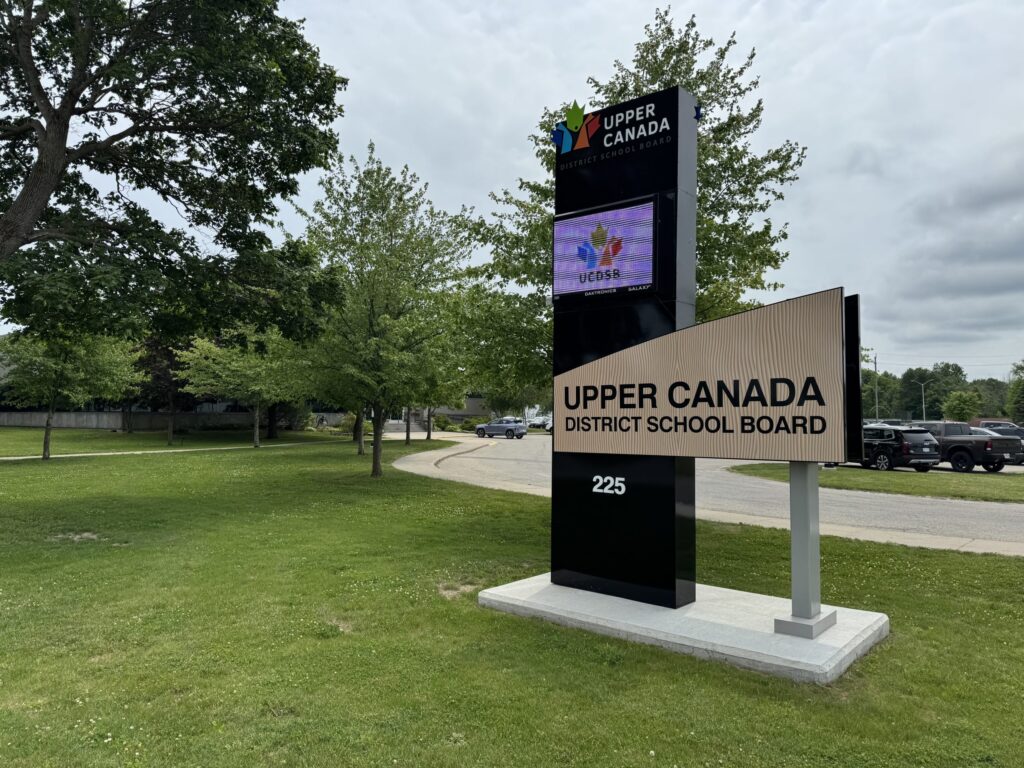
The Upper Canada District School Board (UCDSB) has its new budget ready for the next school term.
Trustees for UCDSB approved the 2025-2026 budget during their final session, June 18, before the summer break.
Jeremy Hobbs, UCDSB chief business officer and treasurer, presented the draft budget for final review and approval. The $470.4 million budget represents an increase of $23.4 million in revenue for the UCDSB compared to the 2024-2025 budget. Revenue for the UCDSB includes both school taxes collected from municipalities that have Upper Canada schools within their areas, and also provincial school support funding and other sources of revenue used for day-to-day operations and planned capital works projects.
Hobbs told the board that the proposed budget “enables the UCDSB to maintain high-quality instruction for students, invest in facility improvements, and develop strategies to manage long-term financial risks.”
The exact figures for the 2025-2026 budget are $477,981,764 for operating expenses and $71,852,545 for next term’s capital works projects. Those figures do not include any possible future money that may become available through new support programs for education from the province or from other sources.
At present, Hobbs’ department projects a possible $400,000 year-end surplus from the budget, assuming no extra expenses occur for the UCDSB.
Budget highlights
The proposed budget maintains all teaching programs that were part of the previous budget and also includes funding to deal with priorities listed in the UCDSB Director’s Work Plan for the 2025-2026 term.
Some of the significant items in the budget include $67.2 million for special education support services, an 8.3-per-cent increase over the amount allocated in the previous budget; $71.9 million for capital projects; $3.6 million for Indigenous education support services, and a $1.4 million increase in the funding allocation for schools to support general school operations and also support staff replacement costs.
The UCDSB also received $2.1 million from the Eductation Ministry’s Rural and Northern Education Fund. This money will go towards supporting digital learning and research programs, the All-In Sports program for eligible schools, and also improving programs that support students in eligible rural and remote schools.
The approved budget now goes to the Education Ministry for review and final approval.